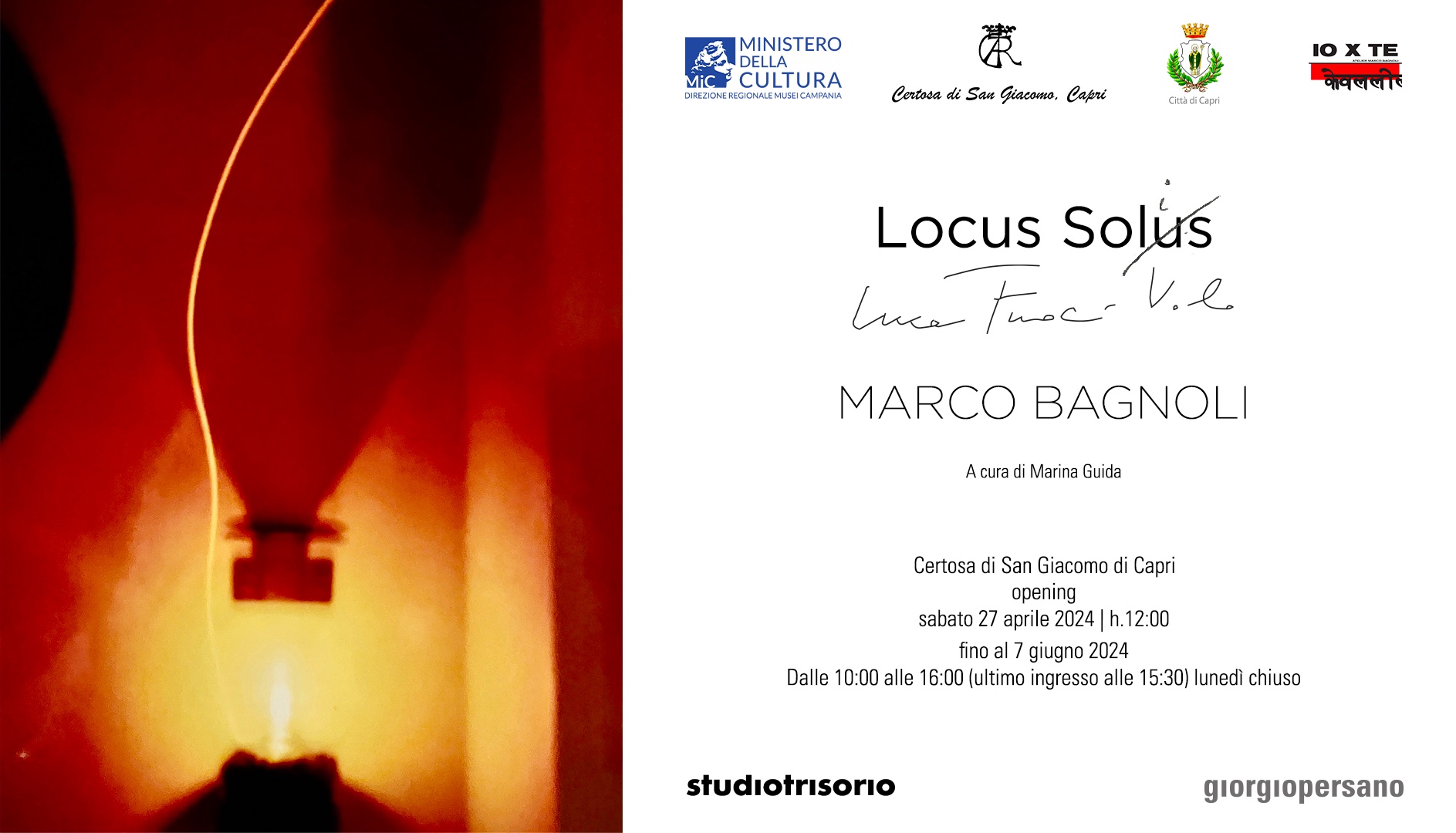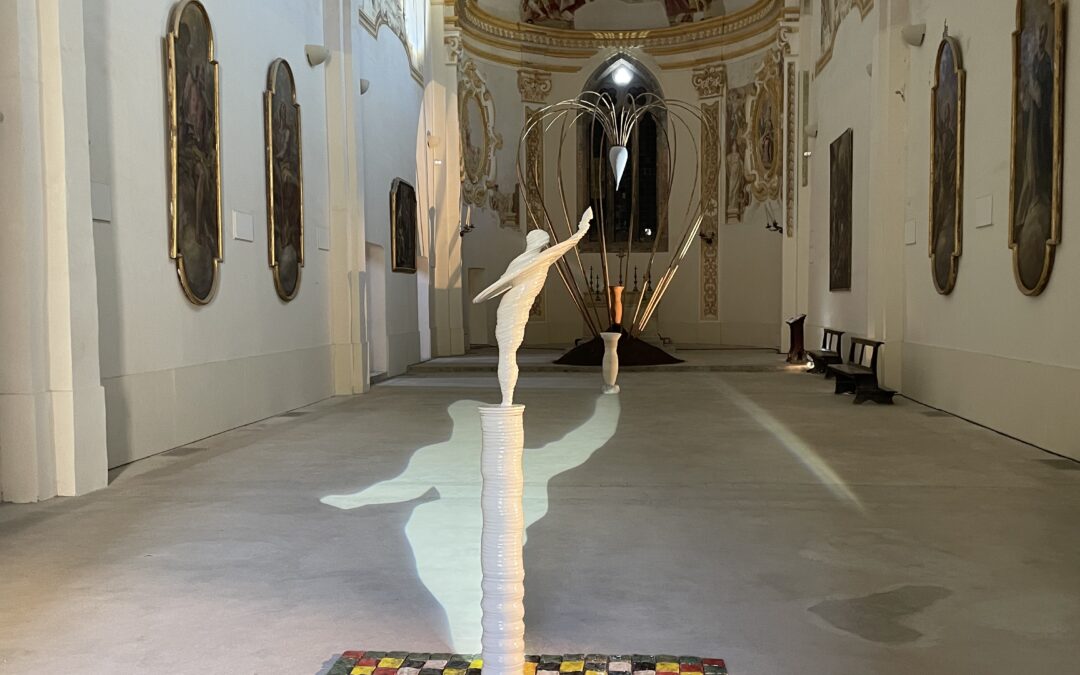
Marco Bagnoli’s exhibition, Locus Solus/Solis”, curated by Marina Guida, opens at noon on Saturday, 27 April at the Certosa di San Giacomo, Capri.
Planned specifically for the fourteenth-century church, the project has been organised by the Turin gallery Giorgio Persano, by Studio Trisorio, and by the Atelier Marco Bagnoli, in collaboration with the Regional Directorate of Museums of Campania and with the patronage of the City of Capri.
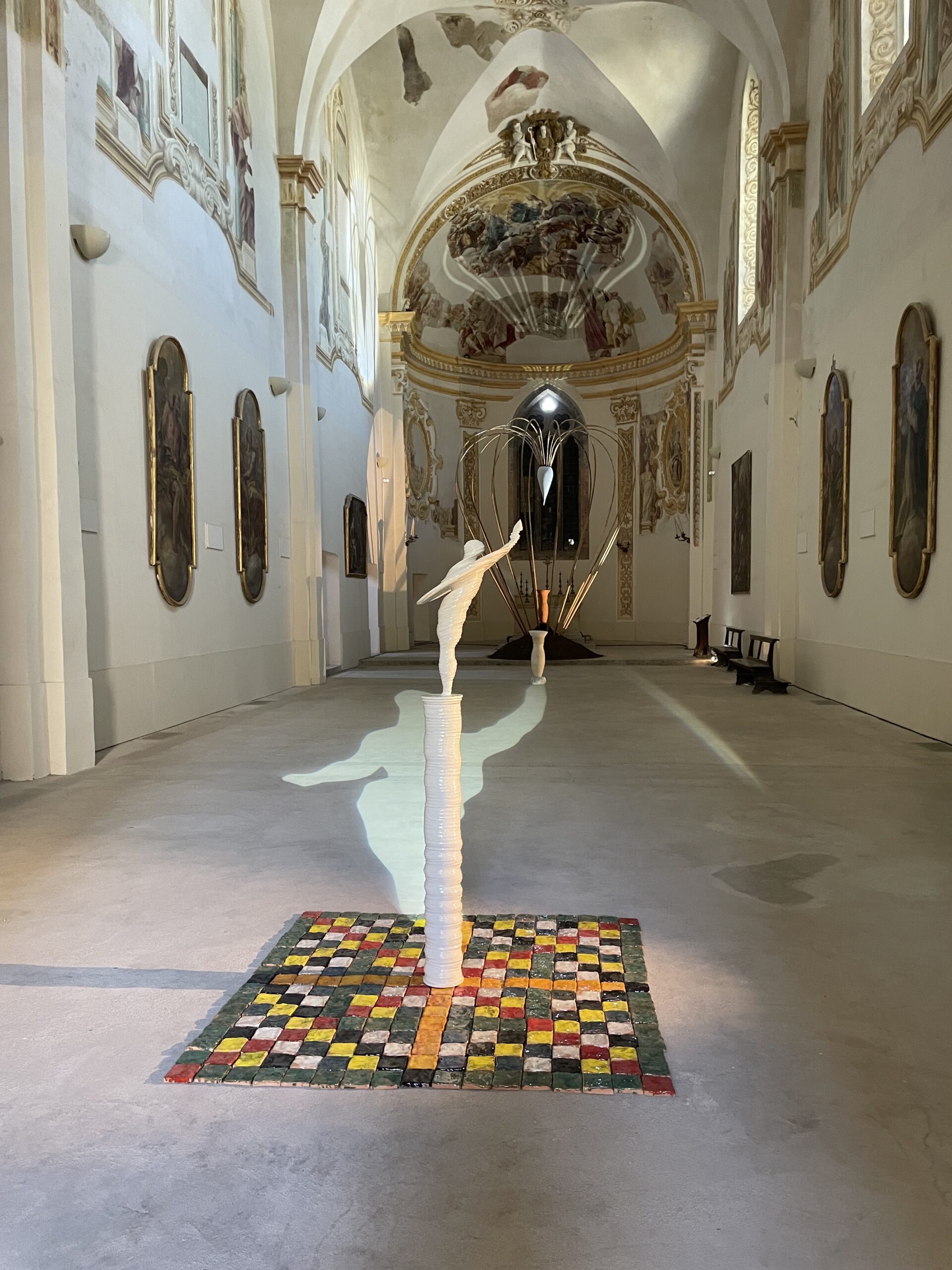
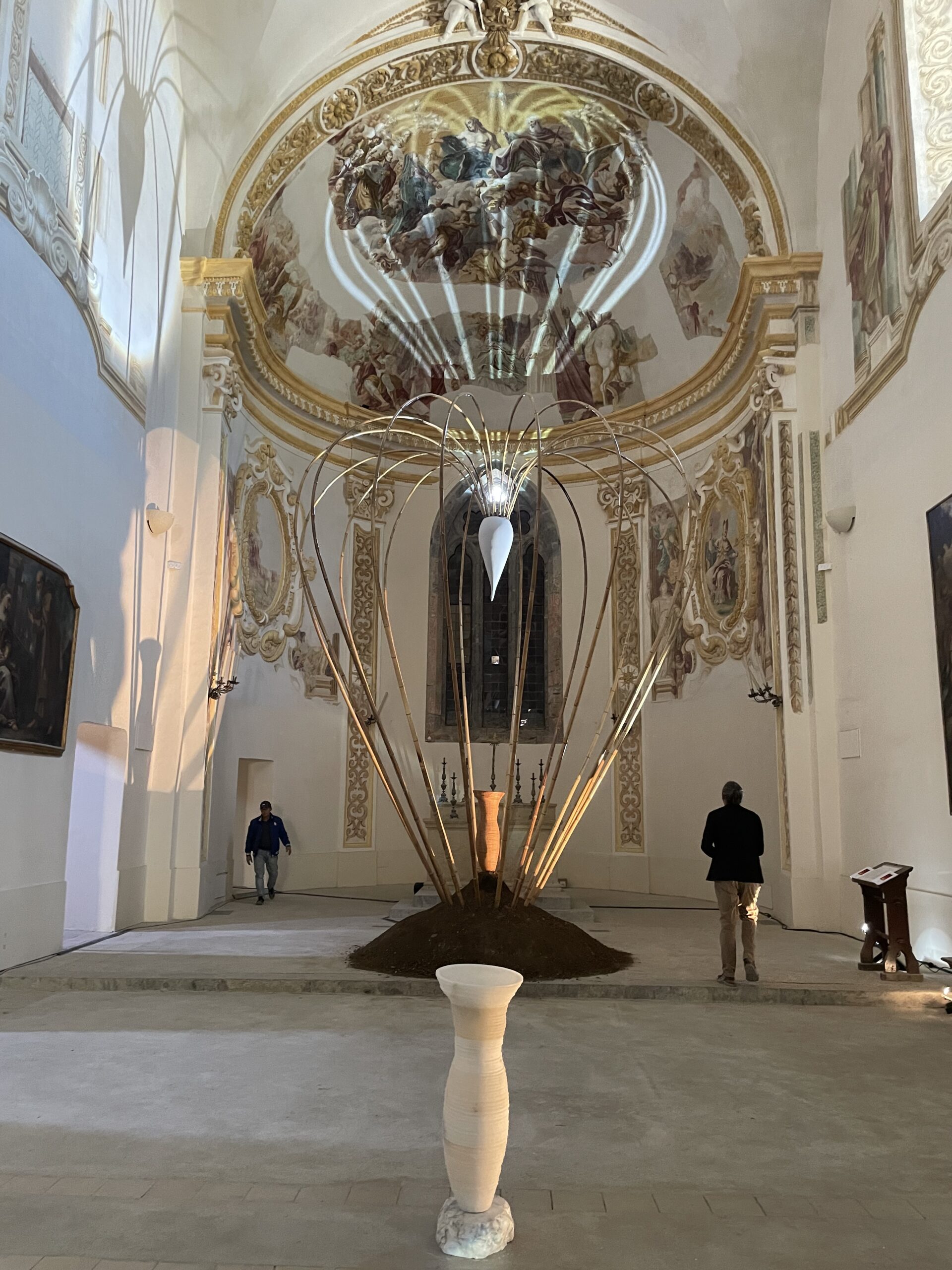
The exhibition itinerary is planned in such a way that each installation establishes a dialogue with the architecture and with the mystical atmosphere of the venue, creating an immersive and hypnotic experience. Starting from the entrance, in the single nave of the church, where we find the ceramic sculpture Noli me Tangere su Mandala di tutte le direzioni, followed by a monumental bamboo hot air balloon almost six metres high bearing the title Il Cielo copre la terra sostiene .
Moving on, at the altar we encounter the alabaster Sonovasoro, from which a continuous background sound emanates evoking that of a shamanic drum, while on the right of the nave we find the fourth work, Dove Porta 2, a large alabaster composition marked vertically by a red band, created in accordance with the proportions of the golden ratio.
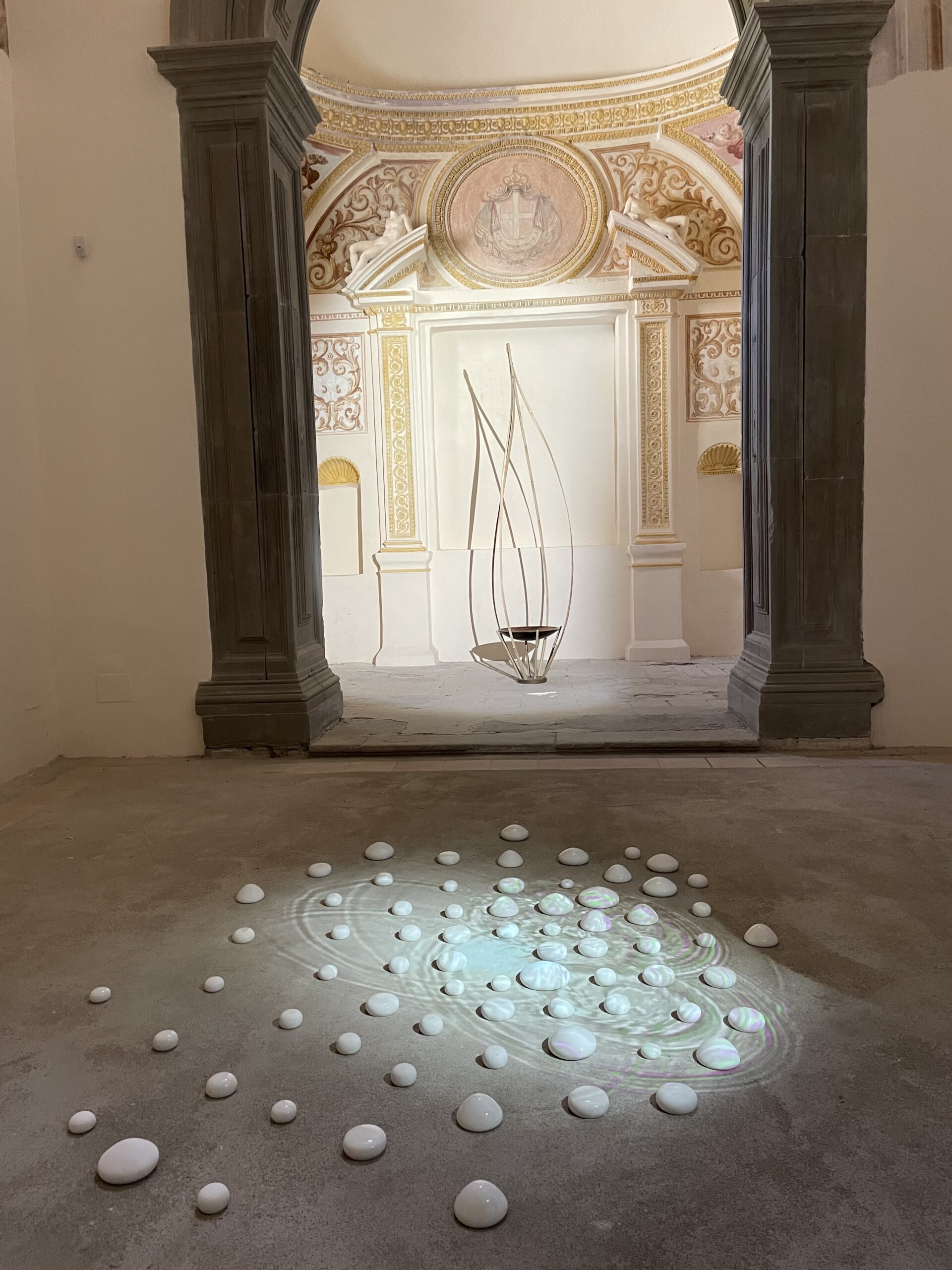
In the side chapel we meet the work Aleph: sixty-four prints arranged in a radial pattern on the floor.
A special lighting will be arranged in the church to allow the video projection of another work, Corpo di Luce, which takes the form of a luminous hot air balloon, and the shadow of the statue of Apollo next to the sculpture E di Delphi, located in the side chapel, and ideally representing its reflection.
Key concepts such as fire, flight, light can in some way ‘anthropomorphise’ space, understood as an isolated, solitary and mysterious place.
“Almost as if it were the metaphor of the human being, of his individual fulfilment, sometimes in complete solitude but, at the same time, in an inevitable, necessary and innate relationship/connection with the profound Self, with the other self, with the laws of the Cosmos,” affirms Marina Guida.
Fire is the crux of the exhibition. An alchemical element par excellence, as it heats, burns, destroys, but at the same time purifies, thrusting upwards towards the celestial dimension, transmuting.
Through the evocative image of a hot air balloon rising into the sky, the exhibition suggests a fascinating perspective: fire not only as a destructive element, but above all as an engine of elevation and transformation, a spiritual element of awareness and knowledge and a form of access towards a new perceptive dimension.
When crossing the threshold of the church, the eye perceives a dark, mysterious space, capturing a play of shapes and profiles that tend upwards following one another in the nave in a seamless continuation. An enigmatic path poised between visible and invisible, immanence and transcendence, physical and metaphysical plane.
The presence of sound, so important for the fullness of the project, completes the journey, with the spectator taking part as a central element: the exhibition offers an itinerary between the real and the imaginary, an enigmatic path that leads to a condition of temporal suspension, through the use of the works as necessary tools for the realisation of the experience of another dimension.
The double title of the exhibition (Locus Solus/Locus Solis) refers to a double interpretation: the first is inspired by Raymond Russel’s novel, in the triple meaning of ‘lonely place’, ‘singular place’ or ‘unique place’. The second title instead refers to a place of inner research and spiritual enlightenment, an indication of that Gate-of-the-Sun of which Ananda K. Coomaraswamy wrote in his essay “The ‘E’ at Delphi”. The idea of ‘Locus Solus/Solis’ is associated with an extraordinary or fantastic place, a setting that is different from everyday reality. A different and remote territory which can be accessed from the metaphysical gate inviting us to explore new conceptual horizons and to challenge the conventional boundaries of perception and understanding of the planes of existence. Marco Bagnoli manages to convey a sense of disorientation and enigma through works that blend harmoniously with the mystical essence of the place. A journey into mystery and silence, which brings to mind the evocative memory of the now lost Grotta Oscura, on which the Certosa di Capri was built, recalling the state of introspection, of concentration, as is appropriate for an isolated enclosure inherent in the original meaning of the word certosa.
Artworks of exhibitions